
Hala Bala Birding Trip Report – Southern Thailand Rainforest Expedition
Location: Hala Bala Wildlife Sanctuary, Narathiwat Province, Southern Thailand
Introduction
Hala Bala remains one of Thailand’s premier birding destinations and is undoubtedly one of the finest remaining rainforests in Southeast Asia. Situated in the far south of Thailand along the Malaysian border, the reserve protects a unique assemblage of Sundaic species found nowhere else in the country.
When reports began circulating of productive fruiting trees attracting mixed feeding flocks, we decided to make the journey south from Hat Yai. Unfortunately, by the time we arrived, the peak fruiting activity had already passed by just a few days. Many of the trees that had been attracting spectacular concentrations of birds had already been stripped clean, while others still needed time before becoming productive again.
Despite missing the forest at its absolute peak, Hala Bala still produced an impressive selection of rainforest specialities over the following four days.
First Encounters with the Rainforest
Our first morning immediately reminded us why Hala Bala enjoys such a legendary reputation among birders.
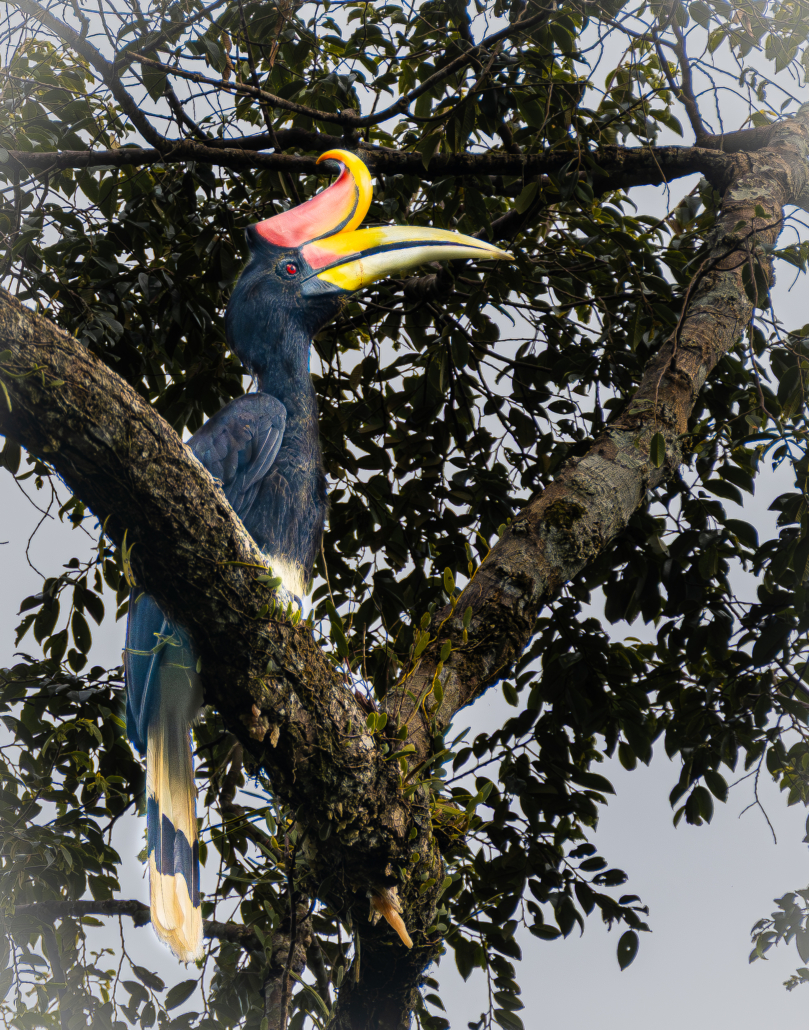
The day began with a flyover Rhinoceros Hornbill, followed shortly afterwards by excellent perched views of the species for nearly thirty minutes. Watching one of Southeast Asia’s most iconic birds quietly feeding in the canopy was the perfect introduction to the rainforest.
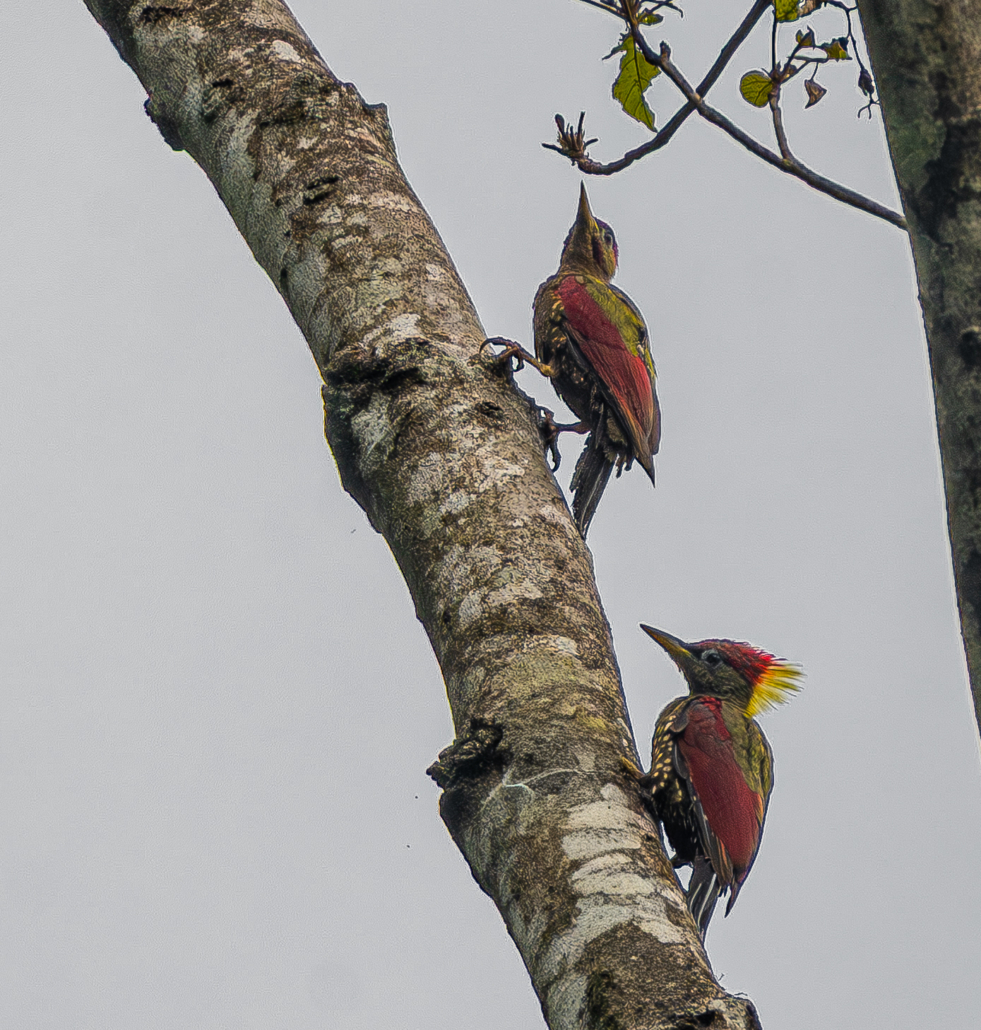
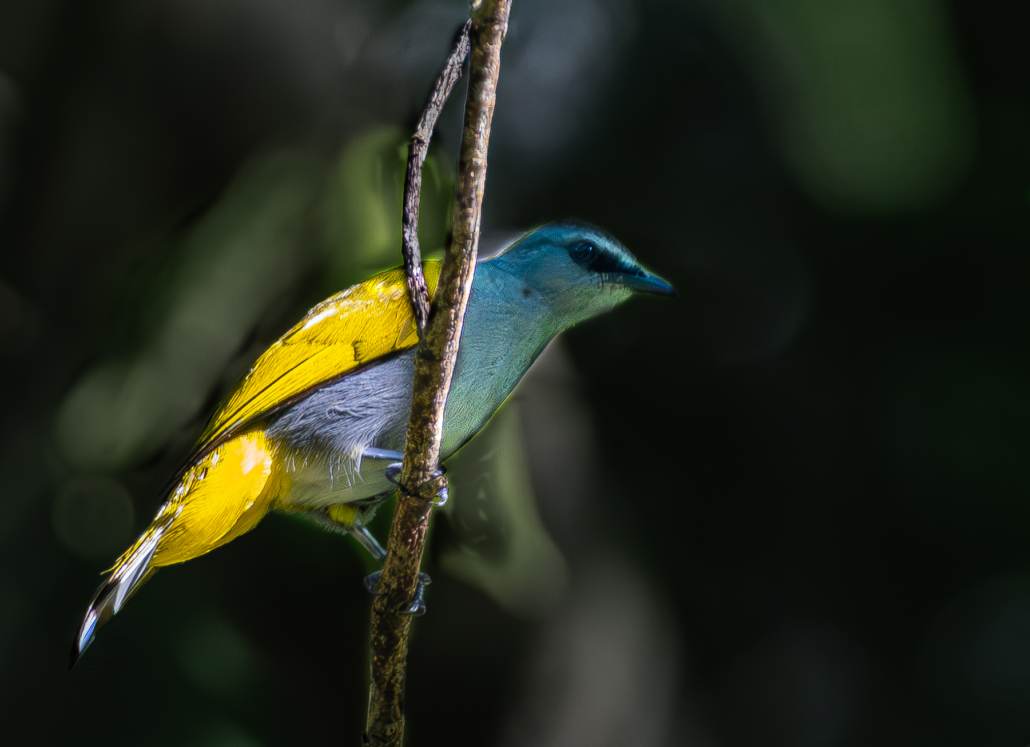
The surrounding forest continued to produce quality birds throughout the morning. Highlights included Green Broadbill, Grey-breasted Spiderhunter, a pair of Crimson-winged Woodpeckers, Red-billed Malkoha, and Asian Fairy-bluebird.
One of the more memorable sightings came when a lone Orange-breasted Trogon was located from the roadside, partially hidden inside dense vegetation. Further along the road, we discovered a nesting Blyth’s Paradise Flycatcher remarkably close to the roadside, allowing excellent views of the adults attending the nest.
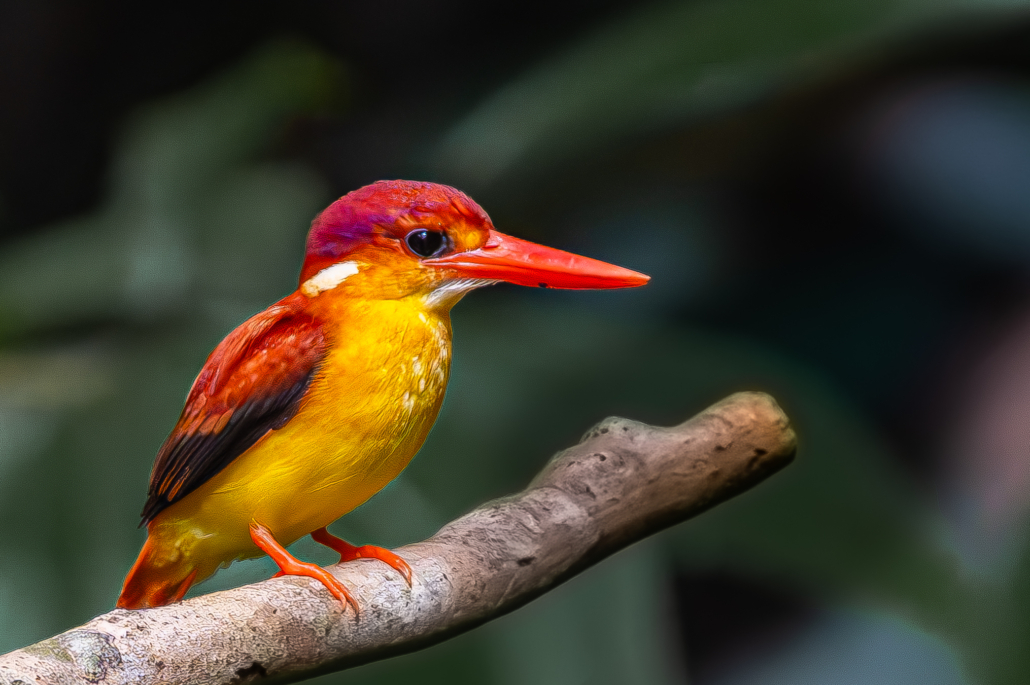
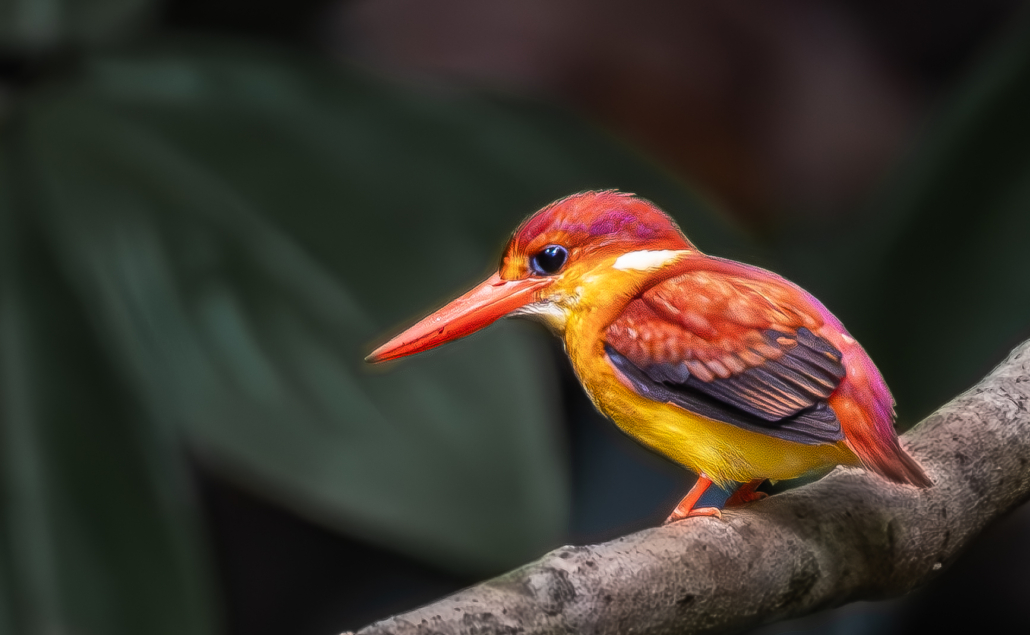
Nearby, a small stream produced another rainforest jewel—a solitary Rufous-backed Dwarf Kingfisher, one of the most attractive kingfishers in the region.
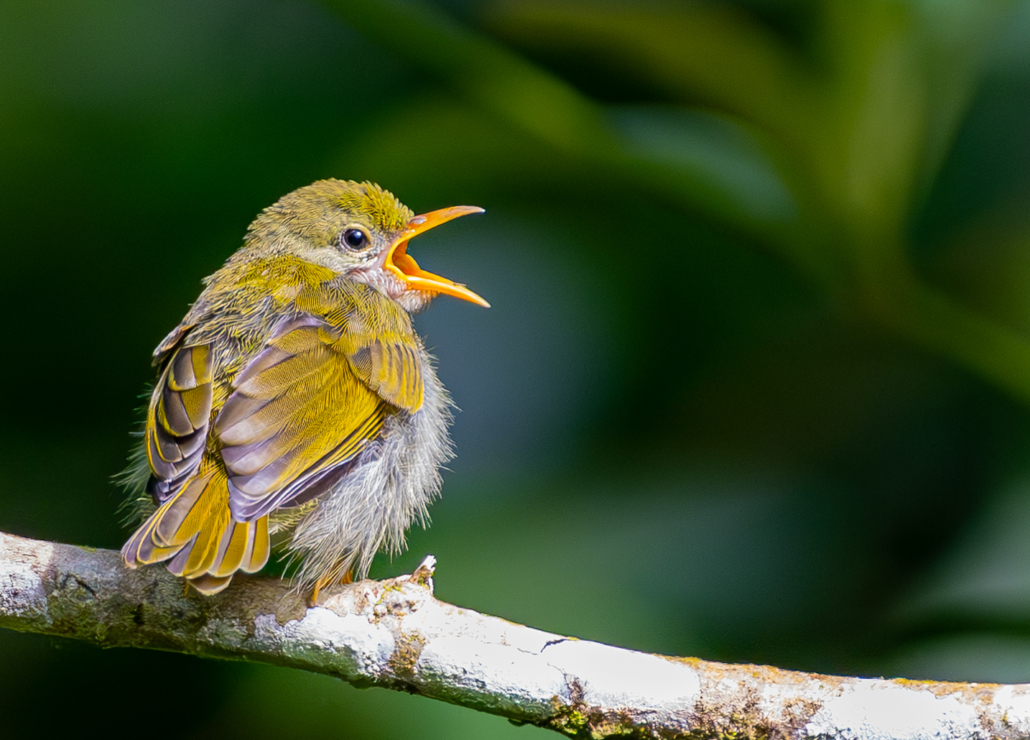
We also heard another Orange-breasted Trogon calling from deeper inside the forest while a Lesser Green Leafbird fed high in the canopy.
Fruiting Trees and Forest Specialists
Our evening session was spent exploring the research station area in search of productive fruiting trees.
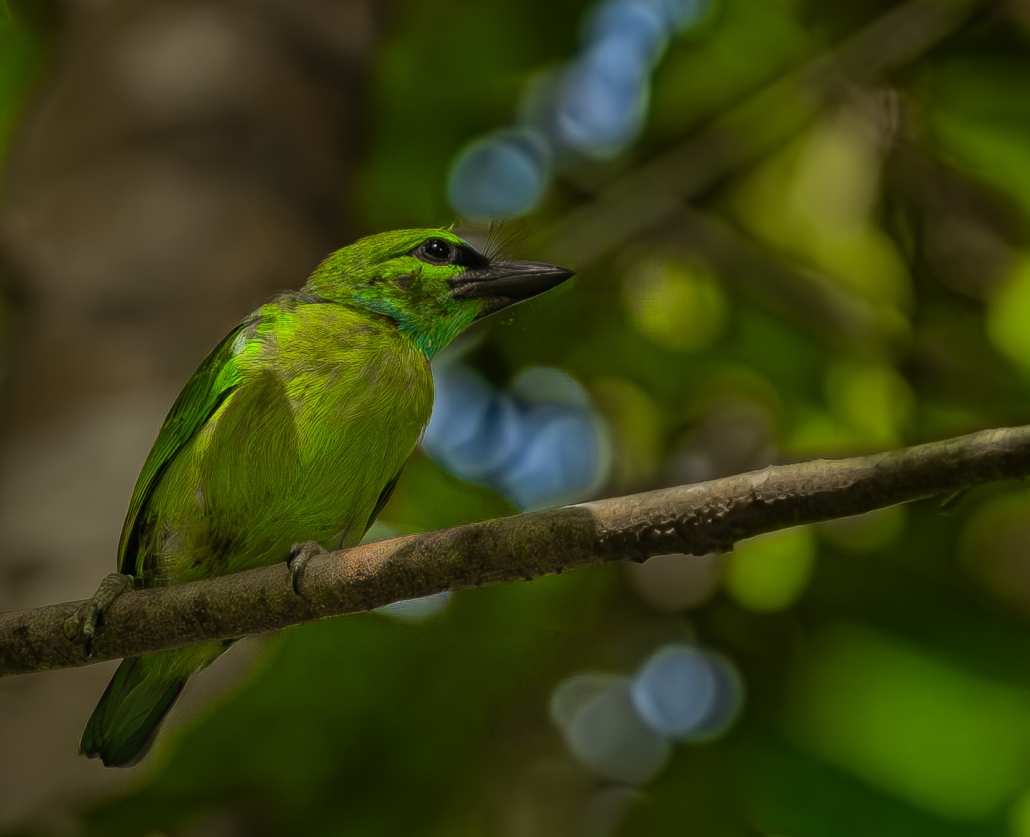
Although the fruiting activity was well past its peak, several trees still attracted a respectable variety of species. Feeding high in the canopy were Grey-bellied Bulbul, Red-eyed Bulbul, Scaly-breasted Bulbul, Spectacled Bulbul, Yellow-crowned Barbet, and several other fruit-eating specialists.
The birds remained frustratingly high for photography, but they provided excellent views and valuable insight into the diversity of Hala Bala’s fruit-eating specialists.
The surrounding reedbeds also produced a lone Yellow-bellied Prinia.
Later that evening we returned to one of the viewpoints hoping for additional hornbill activity. Hornbills proved scarce, but we did enjoy views of a Great Hornbill flying across the valley, together with a Bar-winged Flycatcher-shrike and numerous calling Black-and-yellow Broadbills.
Kingfishers, Broadbills and Forest Birds
Our second morning began at the headquarters area where we successfully located one of the region’s most desirable species, the spectacular Malaysian Blue-banded Kingfisher, perched beside the river.
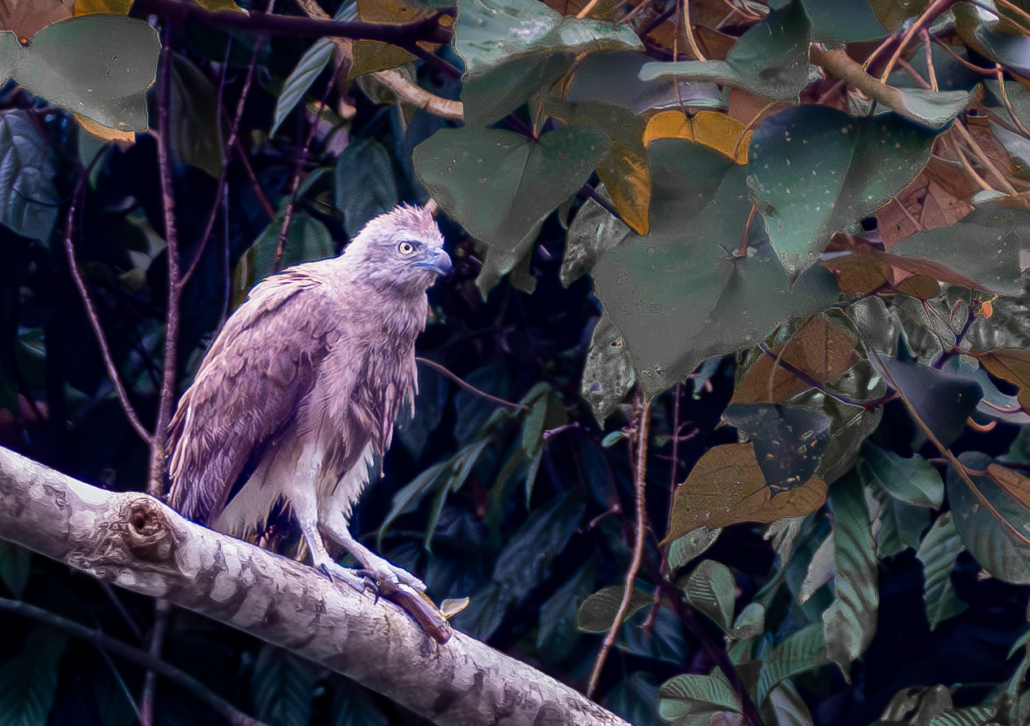
Nearby, a distant Lesser Fish Eagle sat on riverside rocks clutching a freshly caught fish.
With little change at the fruiting trees, we moved deeper into the forest and towards a temple situated at the forest edge. Here we encountered one of the highlights of the trip—a nesting pair of Silver-breasted Broadbills. The birds remained active around the nest and provided excellent opportunities for observation.
The surrounding forest echoed with the calls of Black-and-yellow Broadbills, while deep within the rainforest we heard the unmistakable calls of Diard’s Trogon. Unfortunately, the bird remained hidden deep inside the forest and never revealed itself.
Returning towards our accommodation produced further highlights including Blue-eared Kingfisher, Sunda Brush Cuckoo, Blue-winged Pitta, and White-throated Kingfisher.
Night birding yielded a Large-tailed Nightjar.
Final Days in the Forest
As the expedition continued, the forest continued to reward patient searching.
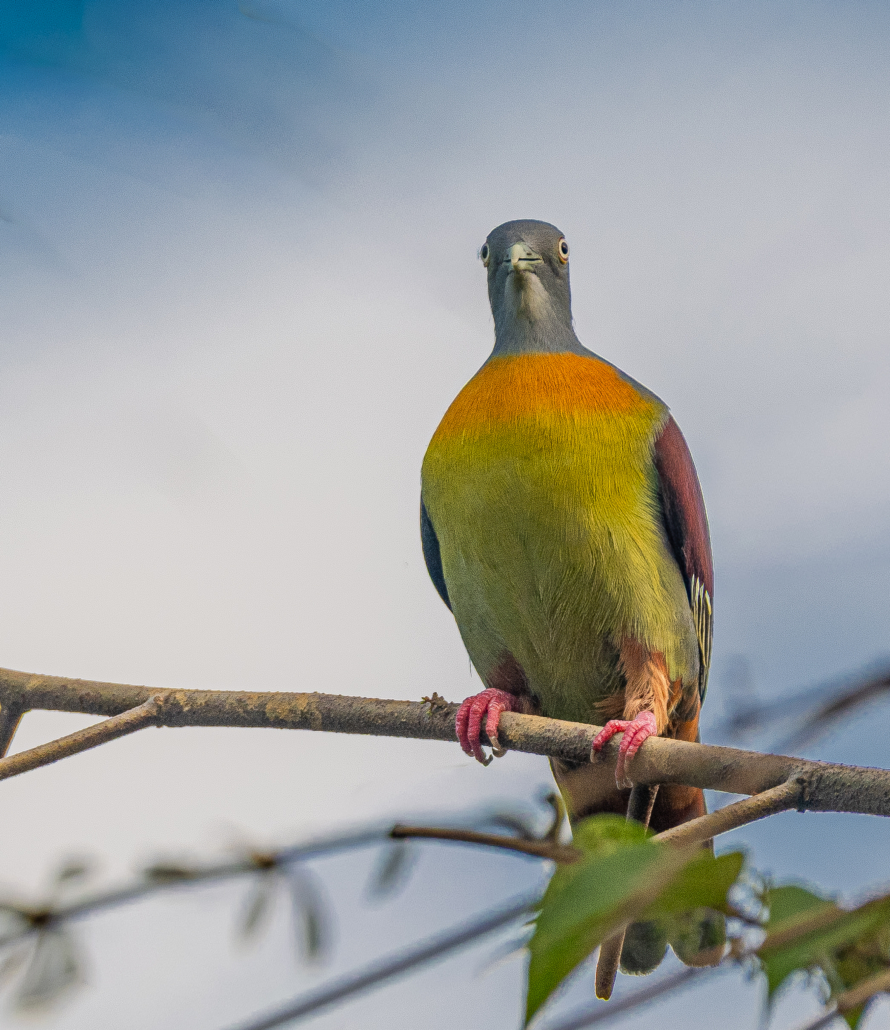
Species recorded included Common Iora, Little Green-Pigeon, Black-and-red Broadbill, Plain Sunbird, Orange-bellied Flowerpecker, White-rumped Munia, and a flock of Wrinkled Hornbills flying across the canopy.
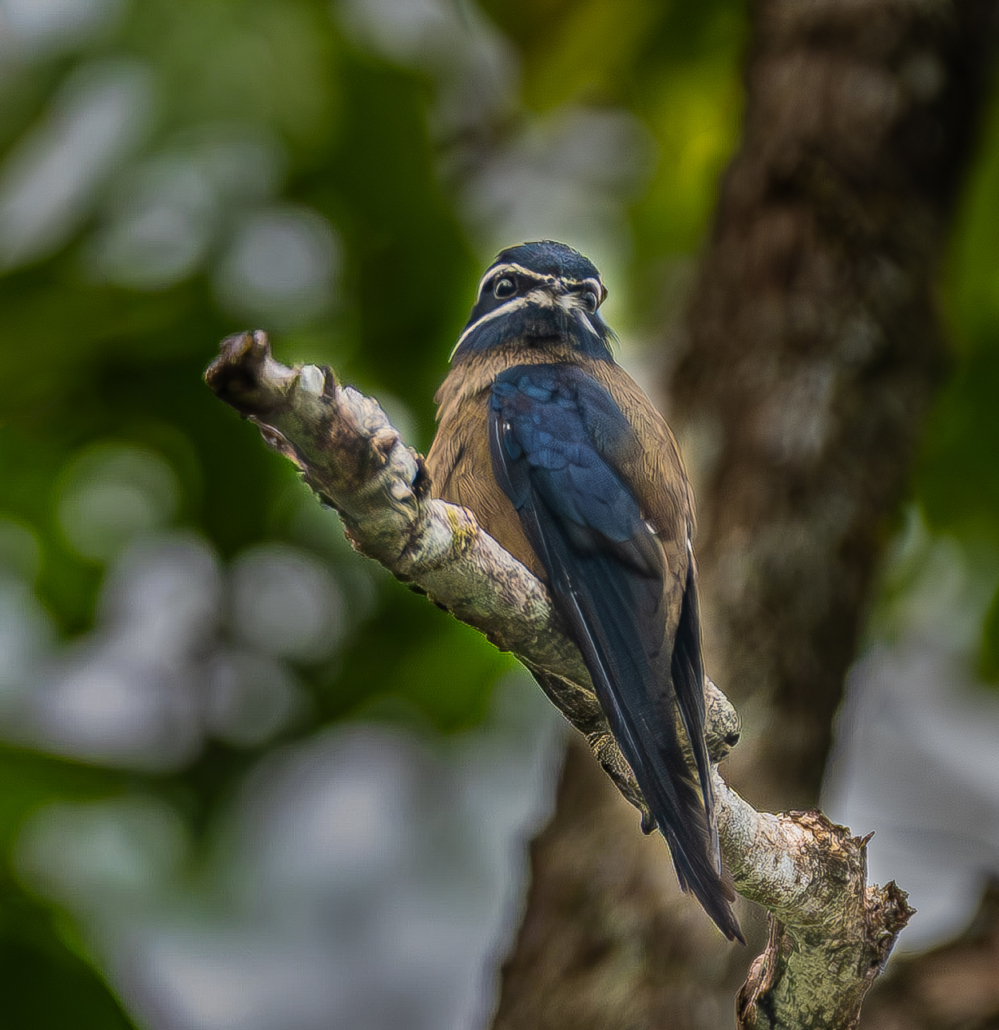
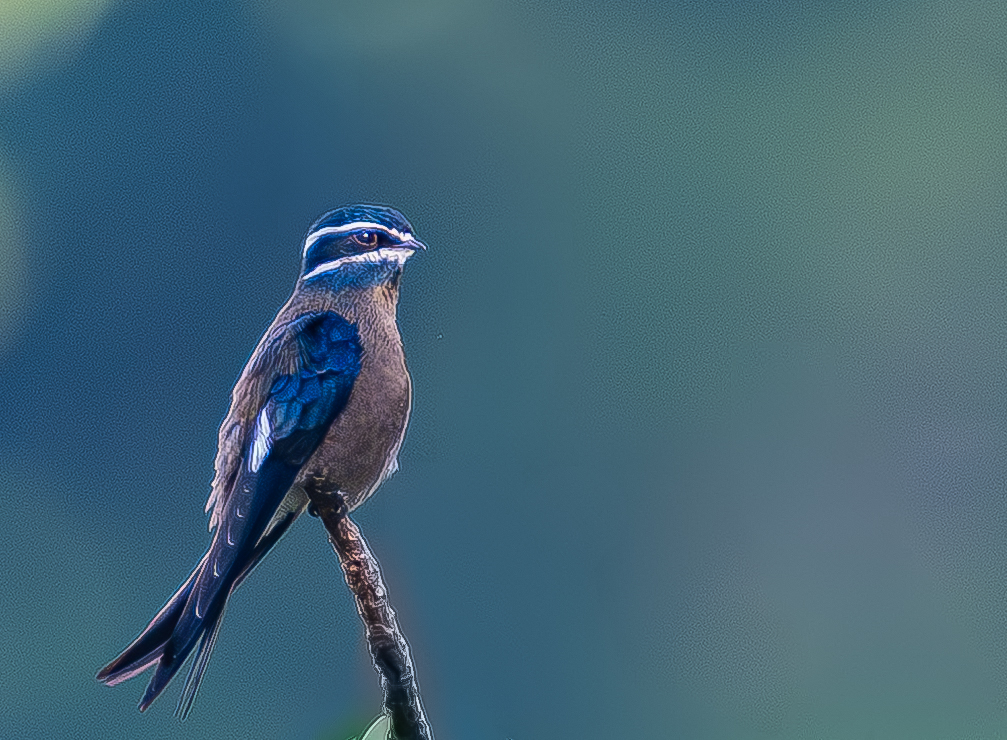
Photographic opportunities with Whiskered Treeswifts, Pacific Swallows, Oriental Magpie-Robins, and Javan Mynas provided a welcome change of pace.
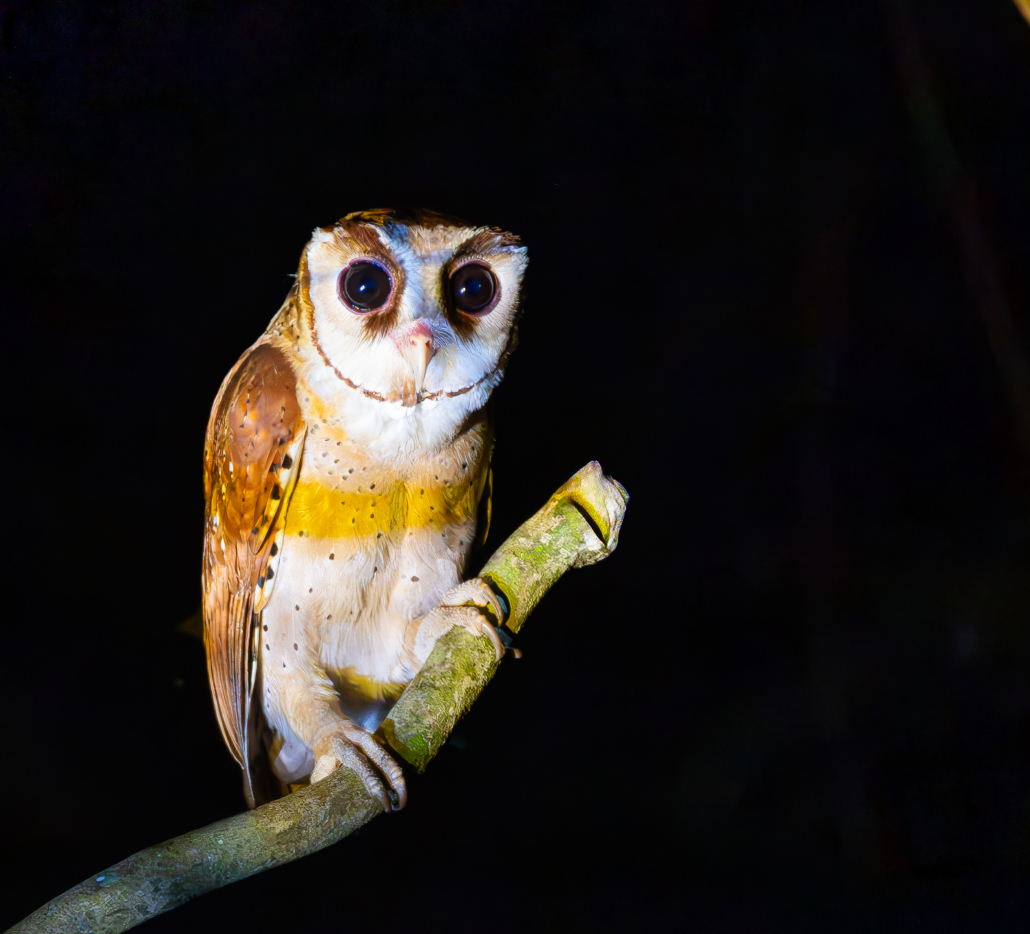
Night birding produced one of the highlights of the entire tour when an Oriental Bay-Owl showed exceptionally well. Numerous Reddish Scops-Owls called throughout the night, although only one was briefly observed.
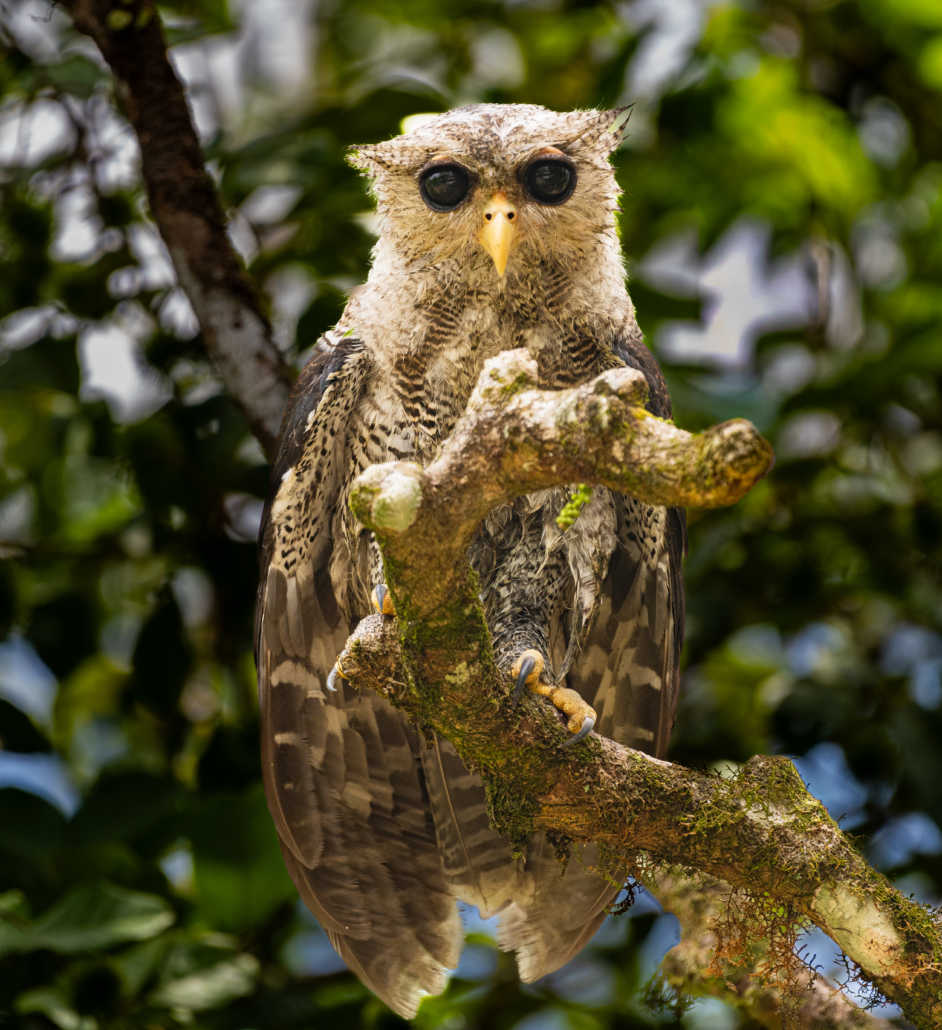
A Barred Eagle-Owl seen during daylight hours near our accommodation was another unexpected bonus.
The Final Morning – Toh Moh Trail
Our final morning was spent exploring the famous Toh Moh Trail.
It was here that perhaps the most satisfying sighting of the entire expedition occurred.
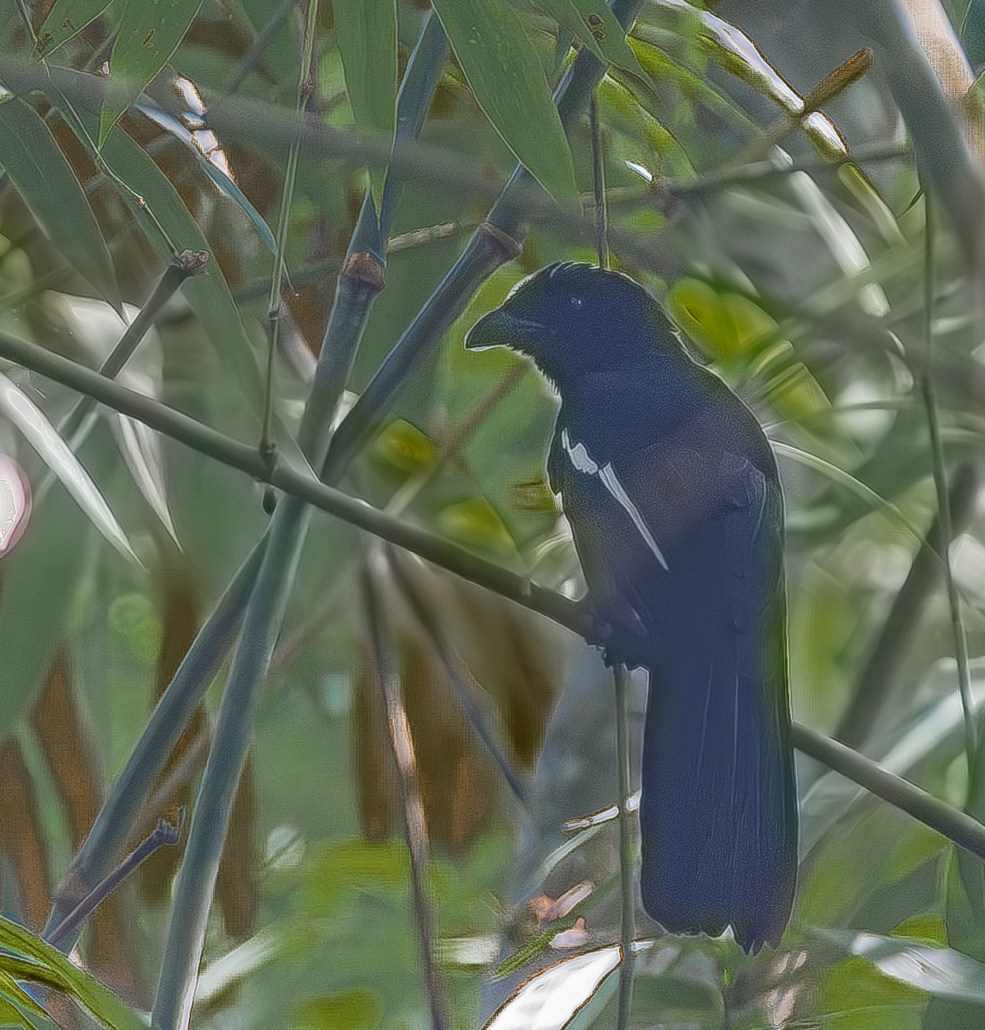
Having studied the distinctive metallic call of the Malayan Black Magpie only a day earlier, I immediately recognised a similar call echoing through the forest. Following the sound, I initially noticed what appeared to be a giant squirrel moving through the canopy. Only after raising my binoculars did the true identity reveal itself—a lone Malayan Black Magpie.
One of Hala Bala’s most sought-after birds.
The magpie remained only briefly before disappearing back into the rainforest, but the satisfaction of recognising the call and successfully tracking down the bird made it one of the most memorable moments of the trip.
Tour Summary
Although we arrived just after the peak fruiting season had passed, Hala Bala still delivered an impressive selection of southern Thailand’s rainforest specialities.
Rhinoceros Hornbill, Malayan Blue-banded Kingfisher, Rufous-backed Dwarf-Kingfisher, Orange-breasted Trogon, Green Broadbill, Silver-breasted Broadbill, Oriental Bay-Owl and Malayan Black Magpie were among the many highlights recorded during four rewarding days in one of Southeast Asia’s finest rainforests.
Yet throughout the expedition there was a constant reminder of what might have been. The fruiting trees that had attracted spectacular feeding flocks only days earlier had already been stripped clean, while others were still waiting to ripen.
The good news?
We will be returning to Hala Bala next month.
With the next wave of fruits hopefully reaching peak condition, we are optimistic that the forest may once again come alive with the mixed feeding flocks and canopy activity for which this remarkable rainforest is famous.
Stay tuned for updates from the next expedition.
Interested in Birding Thailand?
We organize private and small-group birding expeditions throughout Thailand, covering some of the country’s finest birding destinations including Kaeng Krachan, Khao Yai, Krung Ching, Phang Nga, Hala Bala and the mountains of Northern Thailand.
From hornbills, broadbills and kingfishers of the southern rainforests to the unique forest specialists of northern Thailand, our tours are designed to provide rewarding birding, excellent local knowledge and memorable field experiences.
If you are planning a birding trip to Thailand, feel free to get in touch to discuss upcoming departures, customized itineraries or private guiding services.
Travelderness Birding Tours
📍 Thailand Birding & Wildlife Expeditions
📱 +66 962096600
🌐 travelderness.com/thailand
Complete Species List
Spotted Dove
Little Green-Pigeon
Thick-billed Green-Pigeon
Raffles’s Malkoha
Red-billed Malkoha
Yellow crowned barbet
Sunda Brush Cuckoo
Square-tailed Drongo-Cuckoo
Large-tailed Nightjar
Gray-rumped Treeswift
Whiskered Treeswift
Crested Serpent-Eagle
Lesser Fish-Eagle
Oriental Bay-Owl
Reddish Scops-Owl
Barred Eagle-Owl
Orange-breasted Trogon
Rhinoceros Hornbill
Great Hornbill
Blue-eared Kingfisher
Malaysian Blue-banded Kingfisher
Rufous-backed Dwarf-Kingfisher
White-throated Kingfisher
Black-eared Barbet
Crimson-winged Woodpecker
Silver-breasted Broadbill
Black-and-yellow Broadbill
Blue-winged Pitta
Golden-bellied Gerygone
Scarlet Minivet
Bar-winged Flycatcher-shrike
Common Iora
Green Iora
Greater Racket-tailed Drongo
Blyth’s Paradise-Flycatcher
Malayan Black Magpie
Large-billed Crow
Gray-headed Canary-Flycatcher
Dark-necked Tailorbird
Yellow-bellied Prinia
Pacific Swallow
Yellow-bellied Bulbul
Gray-cheeked Bulbul
Buff-vented Bulbul
Cinereous Bulbul
Spectacled Bulbul
Gray-bellied Bulbul
Scaly-breasted Bulbul
Cream-vented Bulbul
Olive-winged Bulbul
Red-eyed Bulbul
Pin-striped Tit-Babbler
Chestnut-winged Babbler
Rufous-fronted Babbler
Moustached Babbler
Ferruginous Babbler
Brown Fulvetta
Velvet-fronted Nuthatch
Javan Myna
Oriental Magpie-Robin
White-rumped Shama
Yellow-breasted Flowerpecker
Crimson-breasted Flowerpecker
Orange-bellied Flowerpecker
Plain Flowerpecker
Plain Sunbird
Gray-breasted Spiderhunter
Asian Fairy-bluebird
Lesser Green Leafbird
Blue-winged Leafbird
White-rumped Munia
Common myna
Great myna


Leave a Reply
Want to join the discussion?Feel free to contribute!