
Mishmi Hills Birding Expedition – Eastern Arunachal Pradesh
The Mishmi Hills are widely regarded as one of India’s premier birding destinations. Situated in the far eastern corner of Arunachal Pradesh, these mountains support an incredible diversity of Himalayan birds, many of which are difficult to see anywhere else in the country. Combined with the nearby rainforests, wetlands and grasslands of eastern Assam, the region offers one of the finest birding circuits in India.
March is one of the best times to explore the Mishmi Hills. While many winter visitors are still present at the higher elevations, resident Himalayan birds become increasingly vocal as the breeding season approaches. Mixed hunting flocks are highly active, pheasants begin calling regularly, and the forests are full of activity from dawn until dusk.
Our eight-day expedition covered the lower elevation forests around Roing, the temperate forests of Tiwari Gaon, KM65 and Mayodia Pass, before descending once again to the wetlands of Maguri Beel and the rainforests around Digboi in eastern Assam.
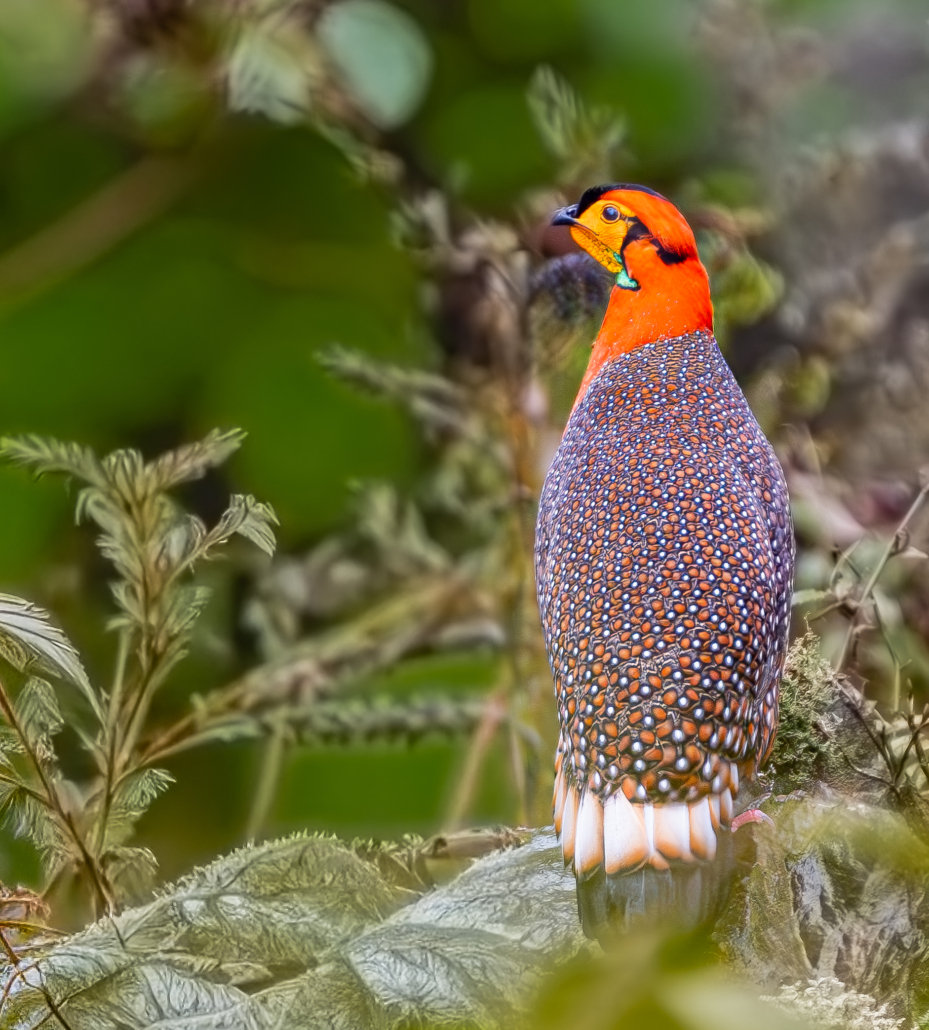
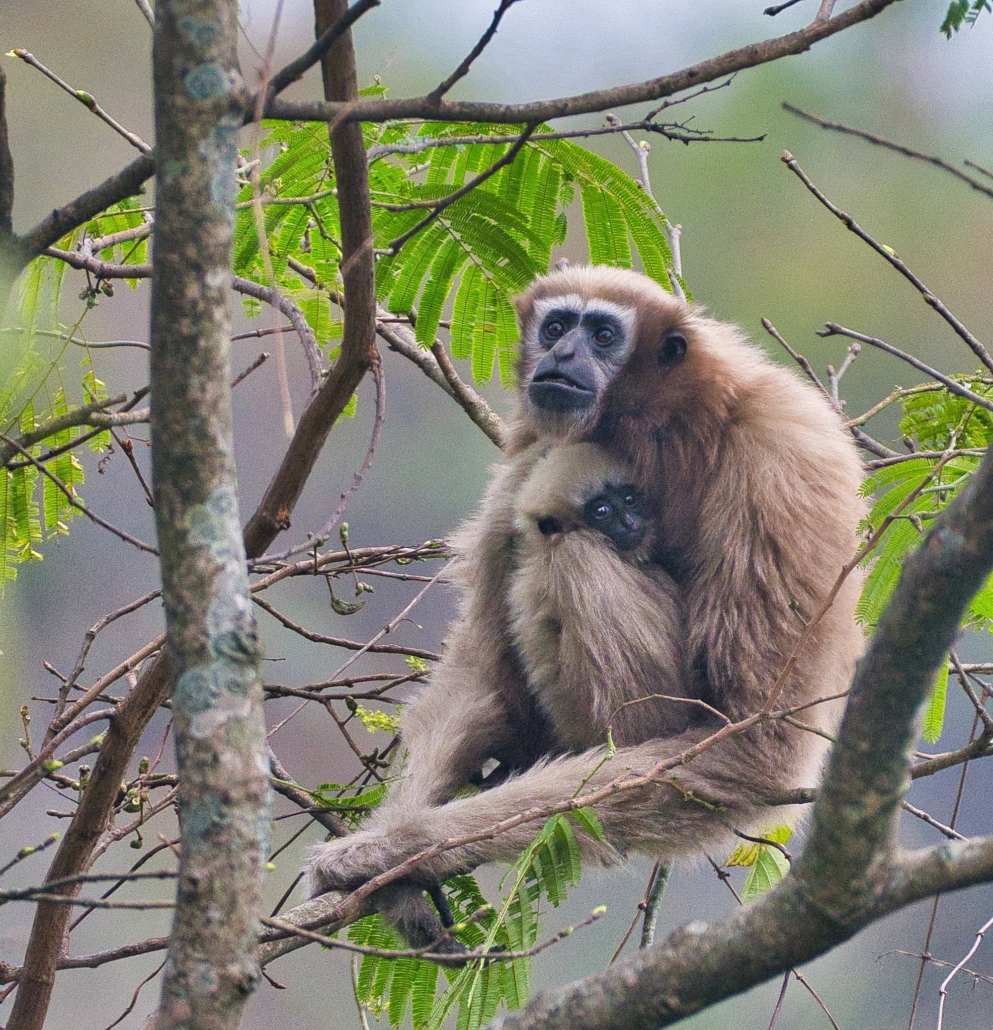
Rather than simply being remembered for the number of birds recorded, this expedition was defined by a series of unforgettable encounters. From a family of Western Hoolock Gibbons feeding quietly through the canopy, to an incredible sighting of Blyth’s Tragopan, close mixed flocks at Mayodia Pass and the constantly calling Mishmi Wren-Babbler, every day had its own story to tell.
Into the Mishmi Hills
Leaving the plains of eastern Assam behind, we slowly made our way towards the Mishmi Hills. As the road climbed higher, the scenery changed completely. Dense forests replaced the open countryside, temperatures became noticeably cooler, and every few kilometres seemed to bring a different habitat.
The birding began almost immediately.
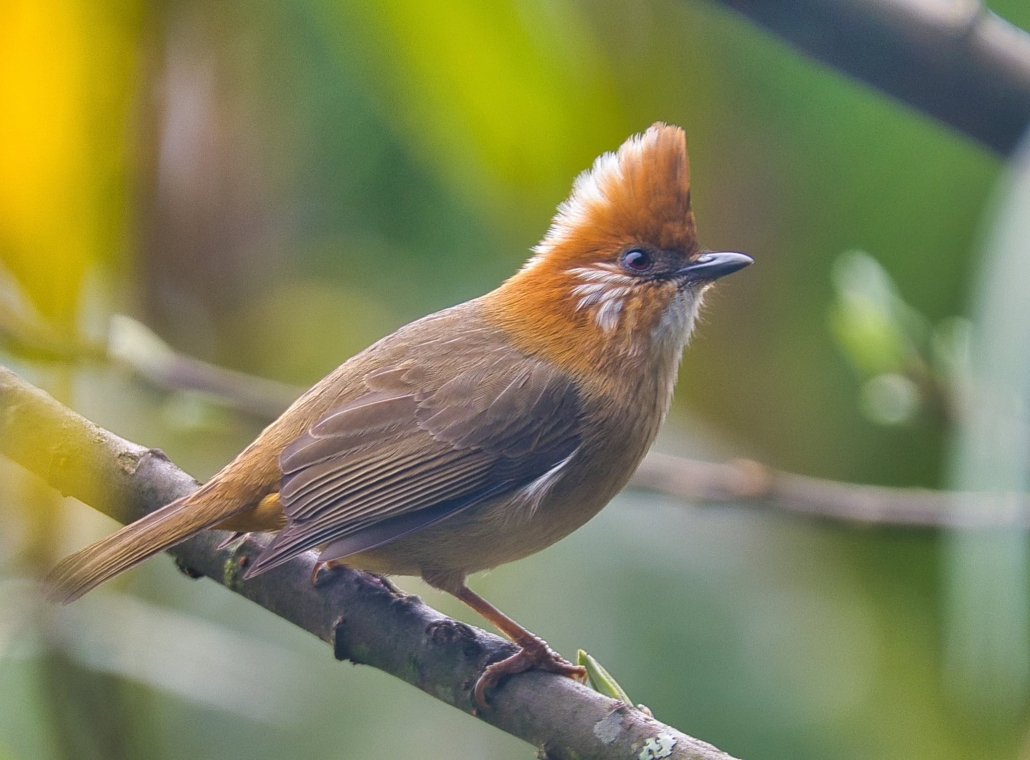
Our first stops produced active mixed hunting flocks with White-hooded Babbler, White-breasted Parrotbill, Silver-eared Mesia, Red-billed Scimitar Babbler, Greater Necklaced Laughingthrush, Bay Woodpecker and several other Himalayan forest birds. Even when the birds weren’t visible, the forests remained full of sound. Grey Peacock-Pheasants called from deep inside the valleys, Spot-breasted Scimitar Babblers answered from dense bamboo, while Brown Wood Owl and Collared Scops Owl reminded us that these forests remain just as active after dark.
It didn’t take long to realise that birding in the Mishmi Hills is very different from most other parts of India. Every roadside stop had the potential to produce something special, and every stretch of forest looked capable of hiding another Himalayan speciality.
Before long, however, our attention was drawn away from the birds by one of the finest wildlife encounters of the entire expedition.
A Family of Western Hoolock Gibbons
One of the biggest highlights of the expedition came much earlier than we expected.
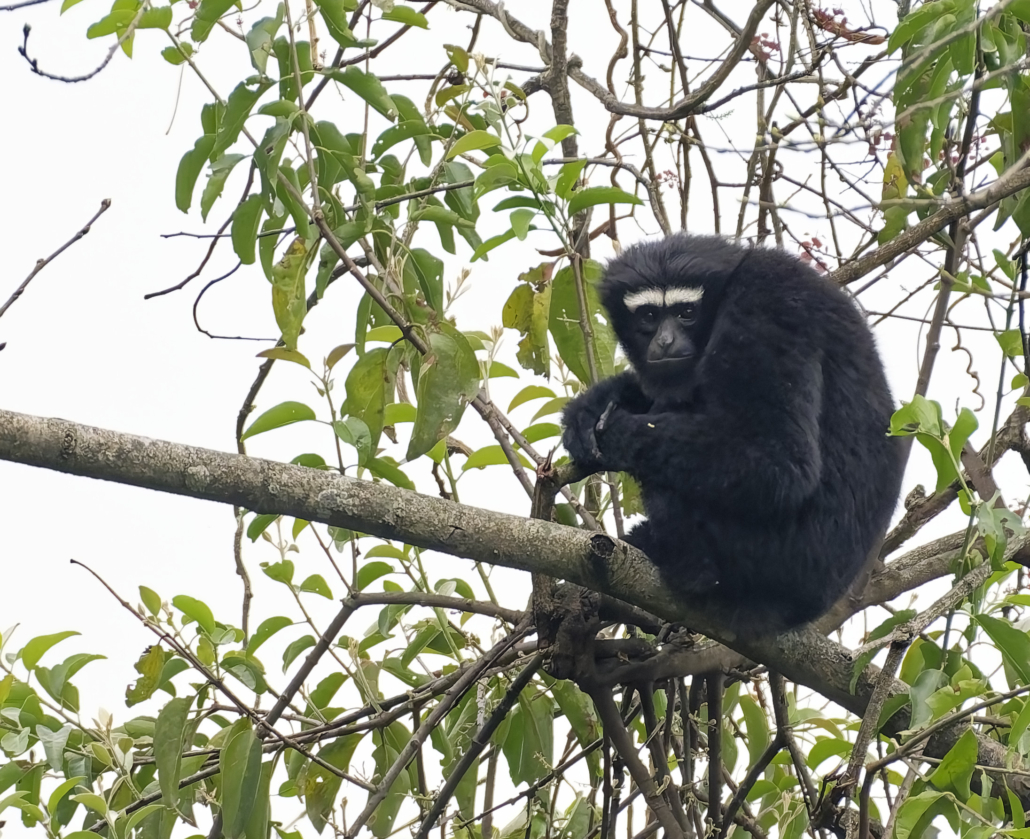
While slowly driving through the lower elevation forests, movement high in the canopy immediately caught our attention. Looking up, we were delighted to find a family of Western Hoolock Gibbons feeding quietly above us.
The group consisted of an adult male, an adult female, a young black male and a baby. For the next several minutes we simply stood watching them as they moved effortlessly through the trees, occasionally stopping to feed before swinging across to the next branch. Their haunting calls echoed across the valley, adding to an already unforgettable encounter.
Unlike many wildlife sightings that last only a few seconds, this family remained in view long enough for everyone to enjoy the experience and photograph them at leisure. Watching these endangered primates behaving naturally in one of India’s last remaining strongholds was every bit as rewarding as seeing some of the region’s most sought-after birds.
It was the perfect start to our time in the Mishmi Hills and a reminder that these forests have far more to offer than birds alone.
As memorable as the gibbons were, the following morning would produce the bird that everyone had been hoping for.
The Blyth’s Tragopan Moment
One of our main targets around Mayodia Pass was the magnificent Blyth’s Tragopan.
We started early, reaching the higher elevations soon after sunrise while our local guide carefully listened for calling birds. Every now and then he would stop, trying to work out exactly where the calls were coming from before moving cautiously into the forest.
During one such stop, while the guide continued following the calls on one side of the road, Sameer and I decided to walk a little further ahead towards the edge of the ridge. From there we had a clear view down into the valley below.
Then, all of a sudden, we both saw it.
A flash of deep crimson.
Perched calmly on an exposed rock below us was a magnificent male Blyth’s Tragopan.
For a few moments we simply looked at each other in disbelief. The bird remained completely relaxed, sitting out in the open as if it had no intention of moving. It was one of those rare encounters where everything comes together perfectly.
We quietly took our cameras out and spent the next few minutes photographing one of the eastern Himalayas’ most spectacular pheasants. It gave us plenty of time for some wonderful photographs before the guide, still searching for another calling bird on the opposite side of the road, unknowingly moved into a position that caught the tragopan’s attention.
Almost immediately, it slipped off the rock and disappeared silently into the thick vegetation below.
Fortunately, by then we had already enjoyed one of the finest Blyth’s Tragopan sightings any of us had experienced.
As if that wasn’t enough, the following morning rewarded us once again.
This time, two magnificent male Blyth’s Tragopans appeared together, giving the whole group another unforgettable encounter with this iconic Himalayan pheasant.
It was undoubtedly one of the defining moments of the entire expedition.
Mixed Flocks and a Roadside Surprise
The forests around Mayodia Pass continued to produce excellent birding throughout our stay.
Almost every stop along the mountain road brought another mixed hunting flock, and no two flocks were quite the same. Fulvettas, barwings, sibias, yuhinas, tits, nuthatches and warblers moved together through the forest, constantly keeping us on our toes as new birds appeared from every direction.
One of the most enjoyable moments of the trip came in a rather unexpected place.
We had stopped at a small roadside eatery beyond Mayodia Pass for a short break when we noticed birds gathering behind the building. Food scraps thrown out behind the kitchen had attracted a steady stream of visitors, and before long we found ourselves watching some of the region’s finest Himalayan birds from only a few metres away.
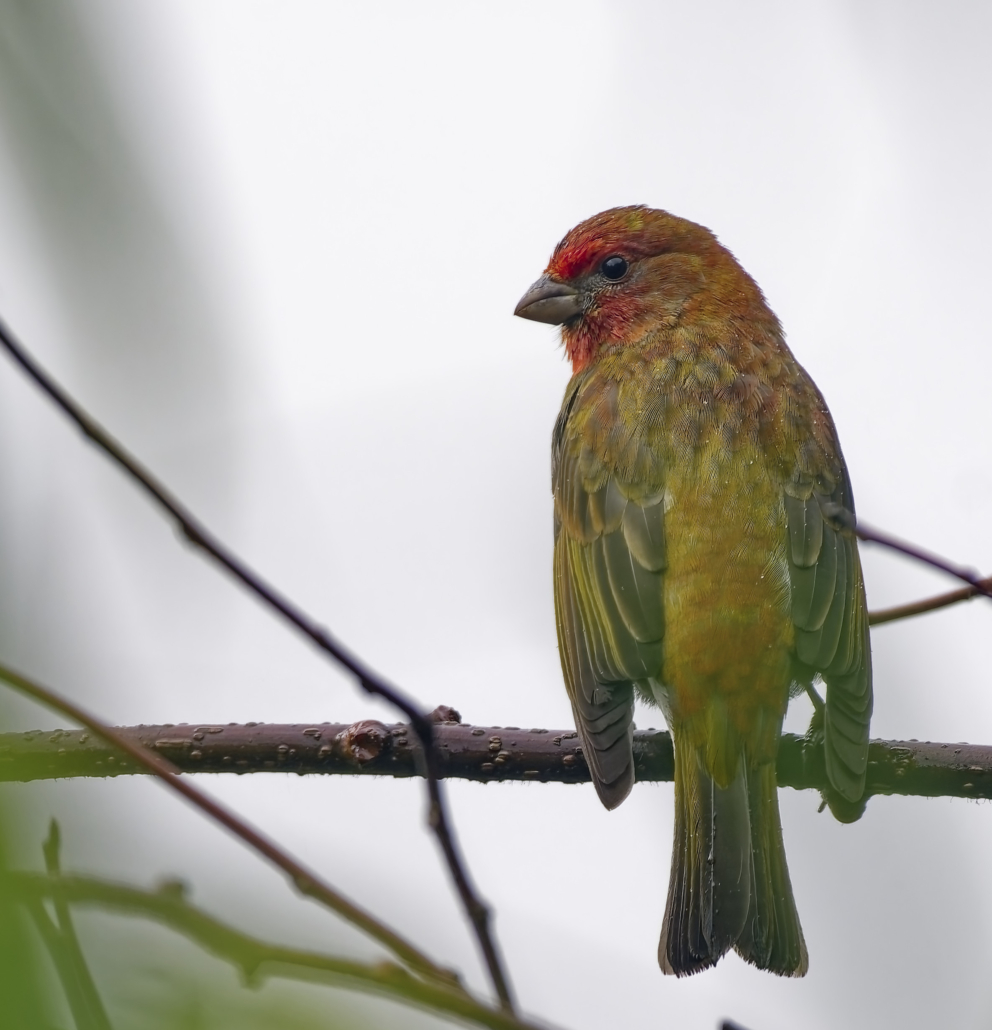
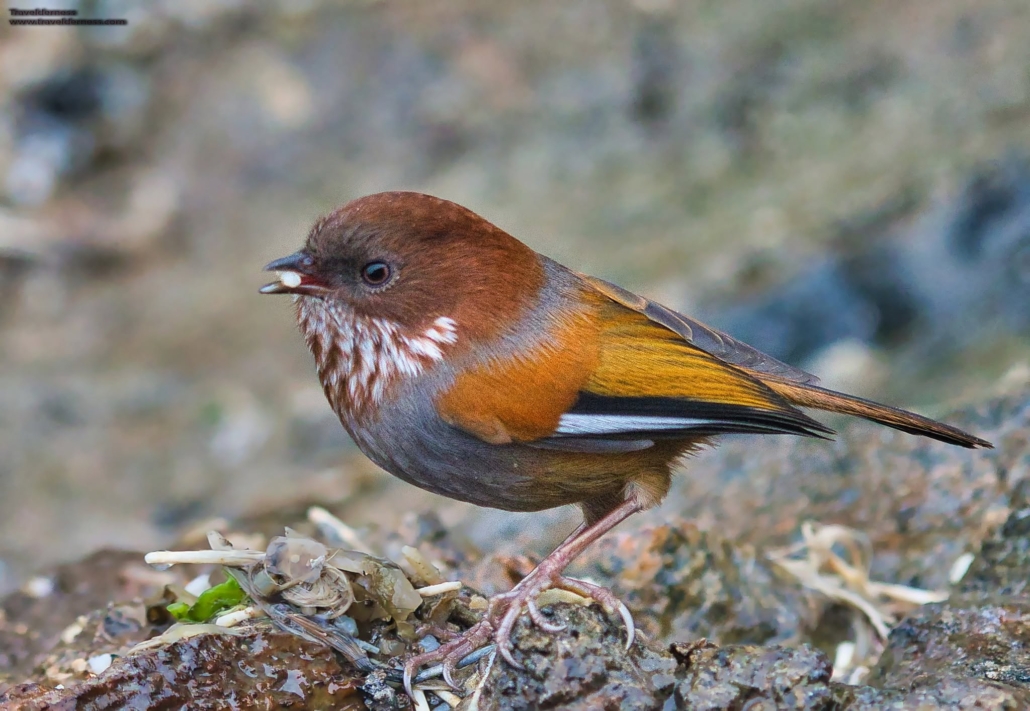
Ludlow’s Fulvettas fed confidently on the ground alongside Streak-throated Barwings, while Dark-rumped Rosefinches and Red-throated Thrushes regularly joined them. We spent a long time simply standing there, enjoying the activity and taking photographs as the birds came and went.
Adding to the atmosphere, a Blyth’s Tragopan continued calling from somewhere deep inside the forest behind us. Although we never managed to relocate the bird, hearing its calls while watching this wonderful gathering of Himalayan species made the stop even more memorable.
Sometimes the best birding moments happen when you least expect them, and this was certainly one of them.
Beautiful Nuthatch, Mixed Flocks and the Voice of the Mishmi Wren-Babbler
Another bird high on our target list was the Beautiful Nuthatch, a species that has become increasingly difficult to find across much of its range.
We eventually connected with one during a rather foggy morning. The conditions were far from ideal and the views were much shorter than we had hoped for, but after spending time searching the forests around Mayodia Pass, it was still a satisfying sighting. Sometimes birding doesn’t provide perfect photographs, but simply seeing the bird is reward enough.
The mixed flocks continued to keep us busy throughout the day. Manipur Fulvetta, Rufous-winged Fulvetta, Yellow-cheeked Tit, Yellow-browed Tit, White-tailed Nuthatch, Rusty-fronted Barwing, Red-tailed Minla, Rufous-backed Sibia, Mrs. Gould’s Sunbird, Fire-tailed Sunbird and several leaf warblers regularly moved through the forest together, making every stop worthwhile.
One bird, however, seemed determined to test our patience.
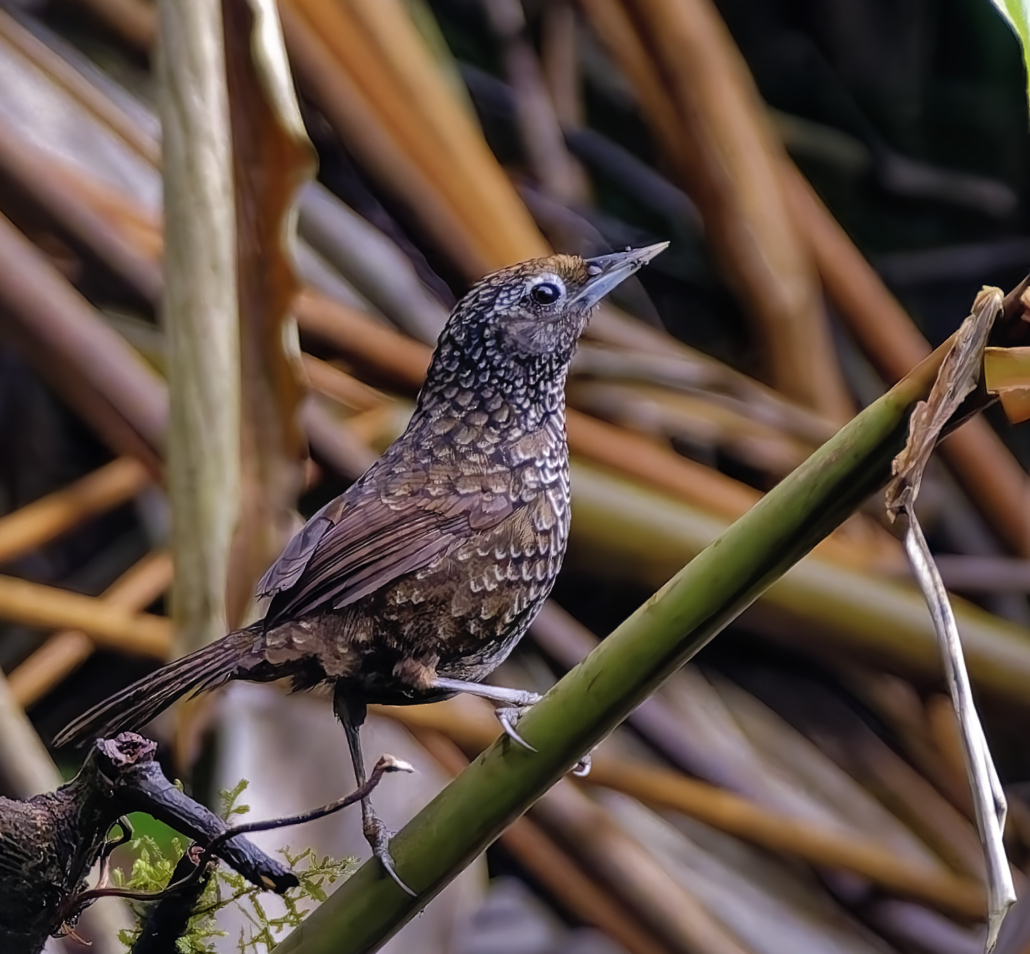
The Mishmi Wren-Babbler.
Almost every suitable stretch of dense undergrowth echoed with its distinctive calls. Time after time we stopped, hoping the bird would finally step into the open, but like most wren-babblers it remained remarkably faithful to its reputation, staying hidden deep inside the vegetation.
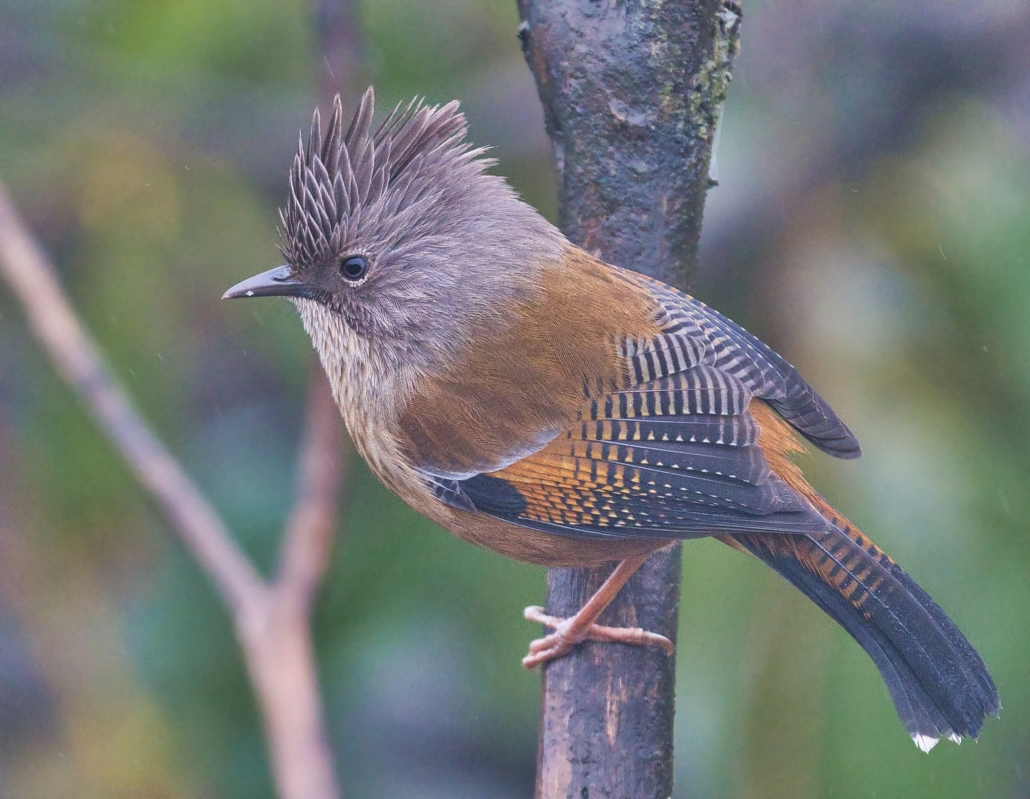
Although our views were brief, hearing it repeatedly throughout the expedition became part of the experience of birding in the Mishmi Hills. By the end of the trip, its call had become one of the sounds we associated most with these remarkable forests.
As our time in the mountains came to an end, we gradually descended towards the plains of eastern Assam, where an entirely different set of habitats and birds awaited us.
Eastern Assam – Wetlands, Grasslands and Rainforests
After several rewarding days in the Mishmi Hills, we gradually made our way back towards the plains of eastern Assam.
The change in habitat was immediate.
The cool temperate forests gave way to wetlands, reedbeds and open grasslands around Maguri Beel and Jia, bringing with them a completely different collection of birds.
One of our main targets here was the elusive Marsh Babbler, and after spending some time working the reedbeds we were eventually rewarded with good views of this highly localised species.
The wetlands also produced several other specialities including Brown-cheeked Rail, Swamp Francolin, Sand Lark, Chestnut Munia, Striated Grassbird, Small Pratincole, Lesser Adjutant, Black-faced Bunting and a good selection of wagtails, pipits and other wetland birds.
From the wetlands we continued towards Digboi and the forests bordering Dehing Patkai National Park, another outstanding birding destination in north-east India.
Although this was the final leg of the expedition, the birding remained excellent. The forests added Plaintive Cuckoo, Dollarbird, Long-tailed Minivet, Crimson Sunbird, White-rumped Munia, along with fleeting views of Chestnut-backed Laughingthrush, bringing a fitting end to an already memorable journey.
By the time we finished our final morning of birding, it was hard to believe how many different habitats we had explored over the previous eight days. From Himalayan mountain forests and high passes to wetlands, grasslands and tropical rainforest, the expedition had showcased an extraordinary diversity of landscapes and birds within a single journey.
Tour Summary
Our eight-day journey through the Mishmi Hills and eastern Assam once again demonstrated why this region is regarded as one of India’s finest birding destinations.
From the lower elevation forests around Roing to the temperate forests of Mayodia Pass, and finally the wetlands and rainforests of eastern Assam, every habitat offered a completely different birding experience. The constant change in scenery was matched by an equally impressive change in birdlife, making every day feel different from the last.
Some moments will remain with us for a very long time.
Watching a family of Western Hoolock Gibbons feeding quietly through the canopy.
Finding a magnificent male Blyth’s Tragopan sitting calmly on an exposed rock below us, followed the next morning by another memorable encounter with two male Blyth’s Tragopans.
Standing behind a small roadside eatery as Ludlow’s Fulvettas, Streak-throated Barwings, Dark-rumped Rosefinches and Red-throated Thrushes fed only a few metres away.
Searching for the elusive Beautiful Nuthatch, listening to the constant calls of the Mishmi Wren-Babbler, and enjoying the endless mixed hunting flocks that make birding in these forests so rewarding.
Finally, the wetlands of Maguri Beel, the grasslands around Jia, and the forests of Digboi added another dimension to the expedition, proving just how diverse birding in north-east India can be.
While the bird list from the tour was impressive, what made this expedition truly memorable were the experiences behind those sightings. The Mishmi Hills are one of those rare places where every stop has the potential to produce something unexpected, and that sense of anticipation is what keeps drawing us back.
We look forward to returning again soon.
Birding India with Travelderness
At Travelderness, we specialize in private and small-group birding tours across some of India’s finest birding destinations, including Arunachal Pradesh, Assam, Nagaland, North Bengal, Sikkim, and many other exceptional birding regions throughout the country.
Whether your interest lies in Himalayan pheasants, laughingthrushes, fulvettas, parrotbills, hornbills, babblers, or the incredible diversity of North East India, we would be delighted to help you plan a birding itinerary tailored to your interests.
To learn more about our birding tours, or to start planning your own birding adventure in India, please get in touch.
🌐 travelderness.com
📱 +919997894884
| Bird list | bird list | bird list |
|---|---|---|
| Swamp Francolin | Green Bee-eater | Grey-throated Martin |
| Blyth’s Tragopan | Great Barbet | Sand Martin |
| Kalij Pheasant | Lineated Barbet | Barn Swallow |
| Grey Peacock-Pheasant (Heard) | Blue-throated Barbet | Sand Lark |
| Ruddy Shelduck | Golden-throated Barbet | Striated Bulbul |
| Indian Spot-billed Duck | Bay Woodpecker | Red-whiskered Bulbul |
| Asian Openbill | Fulvous-breasted Woodpecker | Red-vented Bulbul |
| Lesser Adjutant | Lesser Yellownape | White-throated Bulbul |
| Glossy Ibis | Grey-headed Woodpecker | Ashy Bulbul |
| Indian Pond Heron | Black-winged Cuckooshrike | Mountain Bulbul |
| Grey Heron | Grey-chinned Minivet | Black Bulbul |
| Cattle Egret | Long-tailed Minivet | Graceful (Delicate) Prinia |
| Little Egret | Scarlet Minivet | Yellow-bellied Prinia |
| Intermediate Egret | Long-tailed Shrike | Plain Prinia |
| Great Egret | Grey-backed Shrike | Common Tailorbird |
| Little Cormorant | Lesser Racket-tailed Drongo | Striated Grassbird |
| Great Cormorant | Black Drongo | Spotted Bush Warbler |
| Black Kite | Spangled Drongo | Chestnut-headed Tesia (Heard) |
| Black-winged Kite | Bronzed Drongo | Ashy-throated Warbler |
| Oriental Honey Buzzard | Black-hooded Oriole | Greenish Warbler |
| Hen Harrier | Maroon Oriole | Black-faced Warbler |
| Crested Goshawk | White-throated Fantail | Grey-cheeked Warbler |
| Shikra | Yellow-bellied Fantail | Marsh Babbler |
| Eurasian Sparrowhawk | Yellow-billed Blue Magpie | Mishmi Wren-Babbler |
| Brown-cheeked Rail | Common Green Magpie (Heard) | Cachar Wedge-billed Babbler |
| White-breasted Waterhen | Rufous Treepie | Pin-striped Tit-Babbler (Heard) |
| Common Moorhen | Grey Treepie | Chestnut-capped Babbler (Heard) |
| Bronze-winged Jacana | Collared Treepie | Rufous-capped Babbler (Heard) |
| Black-winged Stilt | Indian Jungle Crow | Golden Babbler (Heard) |
| Red-wattled Lapwing | Asian Tit | Red-billed Scimitar Babbler |
| Common Greenshank | Yellow-cheeked Tit | Spot-breasted Scimitar Babbler (Heard) |
| Green Sandpiper | Sultan Tit | Slender-billed Scimitar Babbler (Heard) |
| Common Sandpiper | Yellow-browed Tit | Striated Babbler |
| Small Pratincole | Grey-throated Martin | White-crested Laughingthrush (Heard) |
| Common Pigeon | Sand Martin | Lesser-necklaced Laughingthrush |
| Mountain Imperial Pigeon | Barn Swallow | Greater-necklaced Laughingthrush (Heard) |
| Barred Cuckoo-Dove | Sand Lark | Striated Laughingthrush |
| Oriental Turtle Dove | Striated Bulbul | Chestnut-backed Laughingthrush (Heard) |
| Eurasian Collared Dove | Red-whiskered Bulbul | Rufous-necked Laughingthrush |
| Spotted Dove | Red-vented Bulbul | Black-faced Laughingthrush |
| Laughing Dove | White-throated Bulbul | Chestnut-crowned Laughingthrush (Heard) |
| Yellow-footed Green Pigeon | Ashy Bulbul | Rusty-fronted Barwing |
| Emerald Dove | Mountain Bulbul | Streak-throated Barwing |
| Alexandrine Parakeet | Black Bulbul | Silver-eared Mesia |
| Rose-ringed Parakeet | Graceful Prinia | Blue-winged Siva |
| Plaintive Cuckoo | Yellow-bellied Prinia | Red-tailed Minla |
| Asian Koel (Heard) | Plain Prinia | Himalayan Shrike-Babbler |
| Greater Coucal | Common Tailorbird | Yellow-throated Fulvetta |
| Collared Scops Owl (Heard) | Striated Grassbird | Rufous-winged Fulvetta |
| Oriental Scops Owl | Spotted Bush Warbler | Ludlow’s Fulvetta |
| Collared Owlet (Heard) | Chestnut-headed Tesia (Heard) | Manipur Fulvetta |
| Brown Wood Owl (Heard) | Ashy-throated Warbler | Nepal Fulvetta |
| Brown Hawk Owl (Heard) | Greenish Warbler | Rufous-backed Sibia |
| Asian Palm Swift | Black-faced Warbler | Long-tailed Sibia |
| Common Hoopoe | Grey-cheeked Warbler | Beautiful Sibia |
| Dollarbird | Marsh Babbler | White-naped Yuhina |
| Indo-Chinese Roller | Mishmi Wren-Babbler | Whiskered Yuhina |
| White-throated Kingfisher | Cachar Wedge-billed Babbler | Stripe-throated Yuhina |
| Common Kingfisher | Pin-striped Tit-Babbler (Heard) | Rufous-vented Yuhina |
| Pied Kingfisher | Chestnut-capped Babbler (Heard) | Striated Yuhina |
| Blue-bearded Bee-eater | Rufous-capped Babbler (Heard) | Black-breasted Parrotbill (Heard) |
| Golden Babbler (Heard) | Black-throated Parrotbill (Heard) | |
| White-breasted Parrotbill | White-hooded Babbler | |
| Fire-tailed Myzornis | Oriental White-eye | |
| Eurasian Wren | White-tailed Nuthatch | |
| Beautiful Nuthatch | Rusty-flanked Treecreeper | |
| Great Myna | Common Myna | |
| Blue Whistling Thrush | Alpine Thrush | |
| Red-throated Thrush | Himalayan Bluetail | |
| Oriental Magpie-Robin | White-rumped Shama (Heard) | |
| Daurian Redstart | Blue-fronted Redstart | |
| Little Forktail | Spotted Forktail | |
| Siberian Stonechat | Chestnut-bellied Rock Thrush | |
| Rufous-gorgeted Flycatcher | Verditer Flycatcher | |
| Grey-headed Canary-Flycatcher | Large Niltava (Heard) | |
| Small Niltava | Orange-bellied Leafbird | |
| Fire-breasted Flowerpecker | Mrs. Gould’s Sunbird | |
| Green-tailed Sunbird | Black-throated Sunbird | |
| Crimson Sunbird | Fire-tailed Sunbird | |
| Streaked Spiderhunter | Little Spiderhunter (Heard) | |
| Eurasian Tree Sparrow | Russet Sparrow | |
| White-rumped Munia | Scaly-breasted Munia | |
| Chestnut Munia | Eastern Yellow Wagtail | |
| Citrine Wagtail | White Wagtail | |
| White-browed Wagtail | Olive-backed Pipit | |
| Rosy Pipit | Dark-rumped Rosefinch | |
| Crimson-browed Finch | Black-faced Bunting |
Mammals
- Western Hoolock Gibbon (Hoolock hoolock) – Two different family groups observed, each comprising an adult male, adult female, a young black male and a baby. Multiple additional troops were heard.
- Orange-bellied Himalayan Squirrel (Dremomys lokriah)
- Himalayan Striped Squirrel (Tamiops mcclellandii)
Amphibians
- UFO Green Frog (possibly Ghatixalus maximus )


Great content! Keep up the good work!
Thank you for the appreciation !